How to Save a Dying Fiddle Leaf Fig With Brown Spots
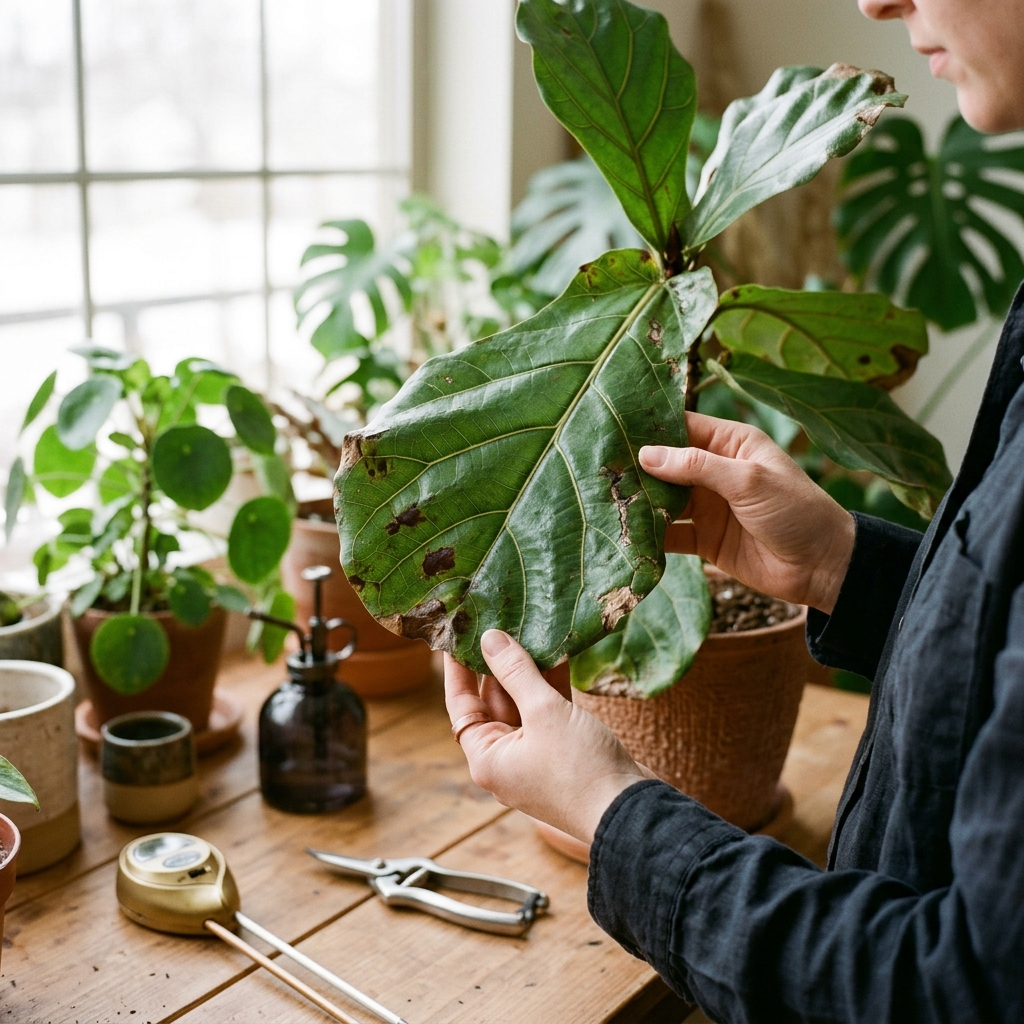
Saving a dying fiddle leaf fig (Ficus lyrata) with brown spots starts with identifying the root cause: overwatering, chronic underwatering, or an active infection. Inspect the root system, prune dead or diseased tissue, let the top two inches of soil dry before watering, and place the plant in consistent, bright indirect light. Prompt diagnosis and environmental stabilization will halt further leaf drop.
Understanding Why Brown Spots Threaten Plant Survival
Fiddle leaf figs show distress primarily through their foliage. When brown spots appear, vital biological processes—such as water transport, transpiration, or nutrient uptake—are disrupted. Without intervention, localized tissue death spreads through the vascular system, leading to leaf drop and plant decline.
For indoor gardeners, addressing these symptoms early prevents moisture issues from developing into severe infections. Examining the pattern, color, and location of the spots is the first step toward recovery.
Root Rot vs. Underwatering: Reading the Pattern of Browning
Improper watering causes most brown spots, but excessive moisture and severe drought produce distinct symptoms on the foliage.
Overwatering and Root Rot
When soil stays saturated, roots suffocate from a lack of oxygen and begin to rot. Unable to take up water properly, the plant develops dark brown to black patches that typically start at the center or base of lower leaves and spread outward. These spots often feel soft or limp and may have a faint yellow halo. If the potting mix smells sour or stays wet for more than ten days, root rot is likely present.
Underwatering and Moisture Deficit
Underwatering creates light brown, dry, or crispy patches along leaf margins and tips. The leaves curl inward, feel papery, and the soil shrinks away from the inner rim of the pot. Both old and new leaves can droop without the yellowing associated with overwatering.
Key Takeaway: Dark brown spots spreading outward from the leaf center indicate root rot, whereas dry, papery edges starting at the margins point to underwatering.
Differentiating Fungal and Bacterial Infections
Not all brown lesions stem from watering errors. Opportunistic pathogens frequently target stressed plants and require different care.
Fungal leaf spot typically appears as small, scattered circular lesions across the leaf surface. These spots often develop concentric rings, affect old and new foliage alike, and worsen in stagnant air and damp conditions. In contrast, bacterial leaf spot produces irregular, dark lesions bordered by distinct yellow halos. These expand quickly and cause leaves to drop while still firm.
Because infections can resemble moisture stress in early stages, clear, well-lit photos help differentiate the symptoms. The Plant Doctor: Plant Care app lets you photograph affected leaves to identify whether environmental stress, fungal disease, or bacterial infection is responsible, providing step-by-step treatment guidance tailored to home gardeners.
Key Takeaway: Irregular spots bordered by bright yellow halos or small circular rings indicate a pathogen rather than simple watering issues, requiring prompt isolation and treatment.
Step-by-Step Recovery Protocol for Severely Damaged Plants
When multiple leaves show significant browning and foliage starts dropping, follow this recovery process:
- Inspect the Roots: Gently slide the root ball out of its container. Healthy roots are firm, flexible, and off-white or light tan. Dark brown, black, mushy, or foul-smelling roots indicate rot.
- Prune Damaged Roots and Foliage: Using sterilized shears, cut away decayed roots until only healthy tissue remains. Prune leaves that have lost more than half their surface area to reduce strain on the root system. Disinfect blades with rubbing alcohol between cuts.
- Repot into Fresh, Well-Draining Soil: Discard the old potting mix. Repot the plant into a container with drainage holes using a porous mix containing perlite, orchid bark, and peat moss or coco coir.
- Water Conservatively: Moisten the fresh potting mix lightly to settle the roots. Do not saturate the pot, as a reduced root system cannot absorb large amounts of water.
- Isolate the Plant: Keep the plant separate from other houseplants to prevent pests or diseases from spreading while it recovers.
Key Takeaway: Removing decayed root tissue and repotting in aerated, well-draining soil prevents further root suffocation.
Optimizing Light, Airflow, and Humidity During Rehabilitation
A recovering fiddle leaf fig needs stable growing conditions to rebuild healthy roots and resume normal transpiration.
- Light Exposure: Place the plant in bright, indirect sunlight, such as a few feet from an unobstructed east- or south-facing window. Avoid harsh direct sun, which scorches weakened foliage, and avoid low-light corners where growth stalls.
- Humidity: Maintain relative humidity between 40% and 60%. Do not mist leaves directly, as standing water encourages fungal spores to germinate.
- Temperature and Drafts: Keep ambient temperatures between 65°F and 80°F (18°C to 27°C). Protect the plant from cold drafts, air conditioning vents, and radiators, which can cause shock and leaf drop.
Key Takeaway: Provide bright indirect light and moderate humidity while keeping foliage dry to support root recovery and deter fungal issues.
Long-Term Maintenance Checklist to Prevent Recurrence
Preventative care keeps plants resilient and prevents browning from returning:
- Check Soil Moisture Before Watering: Insert a finger two to three inches into the soil. Water only when this top layer feels completely dry.
- Drain Excess Water: Empty the saucer within fifteen minutes of watering. Never let the pot sit in standing drainage water.
- Clean Leaves Regularly: Wipe dust from leaf surfaces with a damp cloth every few weeks to maintain efficient photosynthesis.
- Hold Fertilizer: Do not fertilize a stressed plant. Fertilizer salts can damage delicate new roots; resume feeding at half strength only after healthy new growth appears.
- Track Leaf Changes: Monitor existing spots to ensure they do not expand. If you are unsure whether a spot is stabilizing or spreading, use the daily free diagnosis allowance in Plant Doctor: Plant Care to photograph and monitor symptoms over time.
Key Takeaway: Regular soil moisture checks, good drainage, and clean foliage protect root health and keep brown spots from recurring.
Frequently Asked Questions
If a leaf is more than half brown or yellow, prune it near the main stem using clean shears so the plant does not expend resources maintaining dead tissue. If the spot is small and the rest of the leaf is green, leave it intact to support photosynthesis.
No. Brown tissue is dead and cannot regenerate green pigment. Effective treatment stops the damage from spreading and allows future leaves to emerge healthy.
Do not water on a set schedule. Check the potting mix and water only when the top two to three inches feel dry. A plant with a reduced root system uses less water, so the mix will dry more slowly.
Root rot produces dark brown or black lesions that start near the leaf base or center on lower foliage, often accompanied by wet, sour-smelling soil. Bacterial leaf spot creates irregular dark spots with prominent yellow halos that can appear anywhere on the plant and spread rapidly.