Complete Beginner Guide to Gardening and Plant Care
Healthy plant growth depends on four core environmental factors: light, root aeration, hydration, and soil structure. By identifying plant species accurately and establishing a routine guided by physical observation rather than a rigid calendar, home gardeners can maintain resilient indoor and outdoor plants throughout the growing season.
The Core Challenge for Beginning Gardeners
Most plant failures stem from misdirected care rather than neglect. Overwatering, improper placement, and delayed responses to early stress account for most losses. When foliage droops, discolors, or sheds, determining the root cause can be difficult because overwatering and severe dehydration often present identical symptoms above the soil line.
Developing an observational routine eliminates guesswork. Success requires recognizing early distress indicators before tissue damage becomes irreversible.
1. Understanding Light: The Fuel for Plant Growth
Light fuels photosynthesis, generating the carbohydrates plants need to produce foliage and maintain vascular strength. Because species evolved under different canopy conditions, light requirements vary considerably:
- Direct Sunlight: Unfiltered light hitting leaves directly for four or more hours daily. Suitable for culinary herbs, succulents, and most fruiting crops.
- Bright Indirect Light: Strong ambient light near an unshaded window without direct beam exposure that scorches foliage. Suitable for tropical houseplants such as Monstera, Ficus, and Pothos.
- Low to Moderate Light: Ambient light located several feet from natural sources. Tolerant species like ZZ plants and Snake plants persist in these conditions, though growth slows noticeably.
When stems stretch toward a window and produce sparse leaves (etiolation), the plant needs more light. Relocate it closer to an unobstructed window or add a full-spectrum grow light.
2. Mastering Hydration: Avoiding the Overwatering Trap
Water maintains cellular turgor and transports soil nutrients, but saturated soil suffocates root systems. Roots require pore space to exchange gases; waterlogged medium deprives roots of oxygen and fosters fungal decay.
Avoid fixed calendar schedules. Ambient humidity, ambient temperature, and container material dictate actual moisture loss.
- Test moisture depth: Insert a finger or moisture probe two inches into the substrate. If damp, delay watering.
- Water thoroughly: Apply water evenly around the base until liquid drains freely from the base of the container.
- Empty drip trays: Drain saucers within fifteen minutes of watering to prevent saturated roots and subsequent decay.
Consistent soil checks protect roots from both severe drought stress and waterlogging.
3. Soil, Drainage, and Container Selection
Garden soil is unsuitable for container growing. Topsoil compacts in pots, restricting root expansion and impeding drainage. Potted plants require a porous potting mix—typically composed of peat moss or coco coir for moisture balance, perlite or pumice for aeration, and organic matter for nutrient capacity.
Container design directly impacts root health. Always select containers with functional drainage holes. Unsealed terracotta permits moisture evaporation through its walls, aiding plants prone to overwatering. Plastic and glazed ceramic retain moisture longer, which benefits species requiring consistent dampness.
Select container sizes proportionate to root systems. Overpotting leaves a large volume of damp soil around small root systems, increasing root rot risks.
4. Identifying Plant Stress: Diseases, Pests, and Nutrient Deficiencies
When foliage declines, identifying the specific stressor ensures targeted remediation. Symptoms typically fall into three categories: insect pests, pathogens, or environmental conditions.
- Common Pests: Spider mites leave fine webbing under leaves; mealybugs deposit white, cottony secretions; fungus gnats emerge from persistently damp potting soil.
- Fungal and Bacterial Diseases: Powdery mildew manifests as white superficial growth; leaf spot pathogens produce localized necrotic lesions often surrounded by yellow halos.
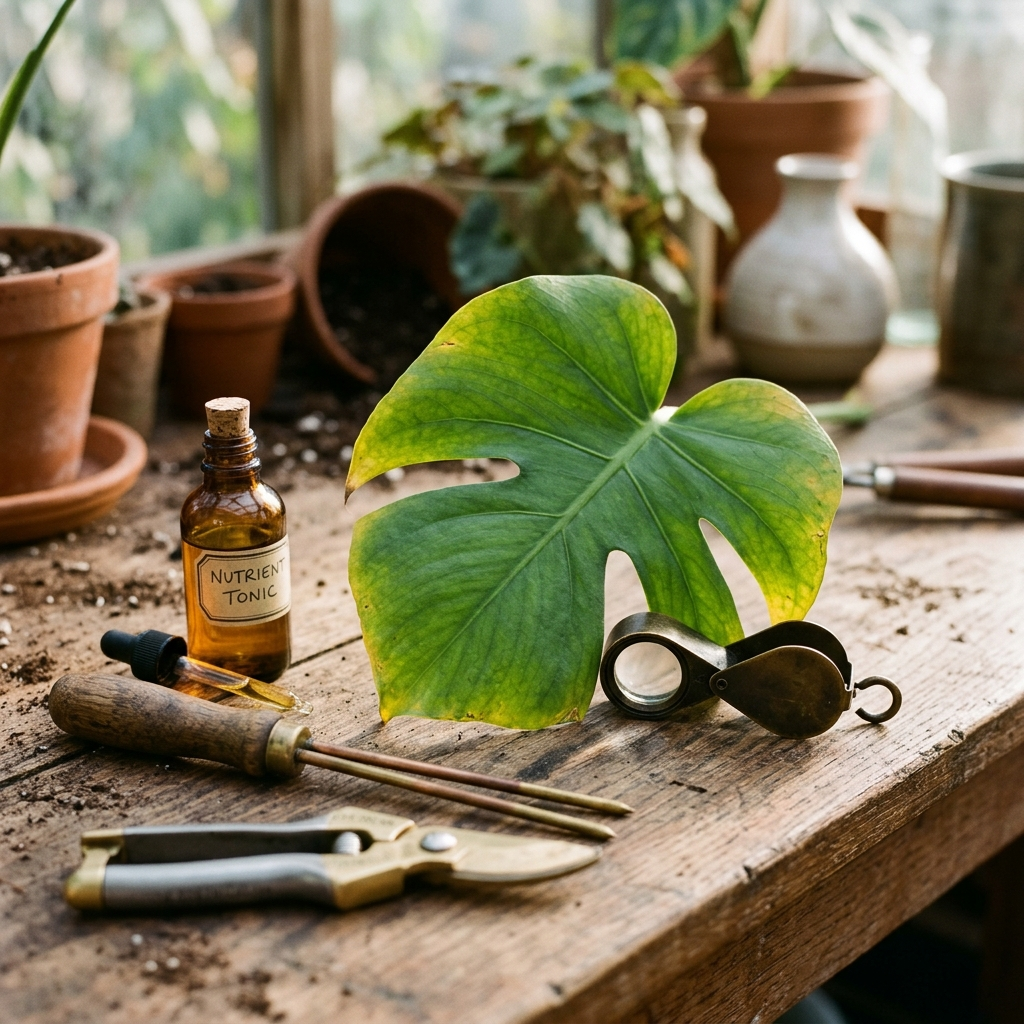
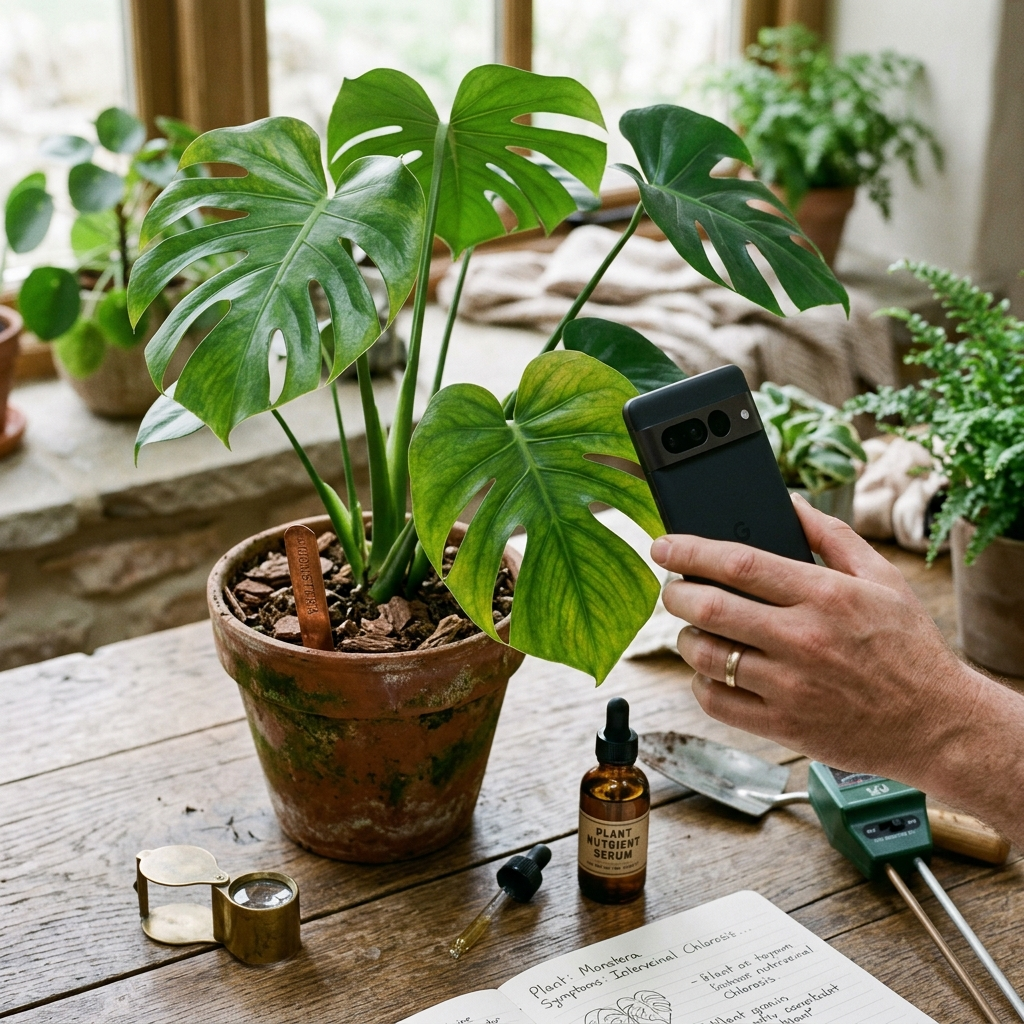
- Nutrient Deficiencies: Nitrogen deficiency causes uniform yellowing on older, lower foliage; iron deficiency produces chlorosis between dark green veins (interveinal chlorosis).
Visual diagnosis can be challenging for beginners. Plant Doctor: Plant Care allows users to photograph affected foliage or stems to receive an instant diagnosis. The app identifies the plant species, detects specific diseases, pests, nutrient deficiencies, or environmental stress, and provides step-by-step treatment and prevention guidance designed for home gardeners. The app includes photo tips to ensure accurate capture, a daily free diagnosis allowance, and an optional PRO upgrade that removes ads and provides unlimited diagnoses.
A Beginner's Step-by-Step Care Checklist
Use this weekly checklist to maintain plant health:
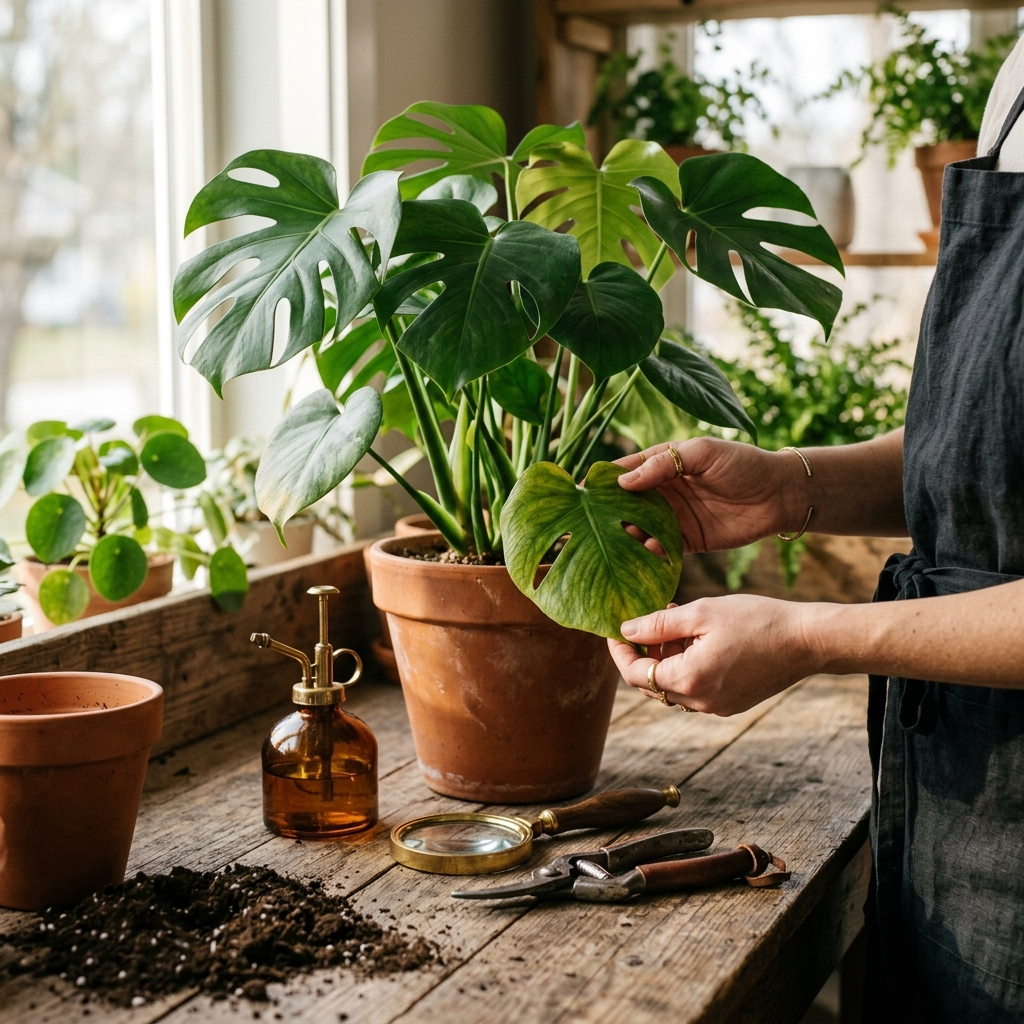
- Inspect Leaf Undersides: Check the undersides of leaves weekly for insect pests and early disease lesions.
- Check Soil Moisture: Test the top two inches of substrate before watering.
- Clean Foliage: Wipe leaves periodically with a damp cloth to clear dust that inhibits light absorption.
- Rotate Containers: Turn pots a quarter turn each week to encourage symmetrical development.
- Prune Dead Tissue: Remove necrotic or damaged foliage using sanitized bypass shears to focus resources on healthy growth.
Cultivating Long-Term Gardening Confidence
Gardening success relies on observation, consistency, and timely intervention. Learning a plant's baseline light requirements, respecting soil drying cycles, and monitoring leaves regularly build a dependable framework for plant care. When unexpected symptoms arise, taking a clear photo with Plant Doctor: Plant Care helps identify the issue and initiate treatment before damage becomes severe.
Frequently Asked Questions
Avoid fixed calendar schedules. Check moisture by inserting a finger or probe two inches into the potting medium. Water only when the top layer feels dry, adjusting for seasonal light, humidity, and temperature variations.
Yellow leaves are most frequently caused by overwatering, poor drainage, or nutrient deficiencies like low nitrogen. Examine soil moisture first, as saturated potting medium is the primary cause of yellowing in container plants.
Take a clear, well-lit photograph that captures both symptomatic areas and surrounding healthy growth. Plant Doctor: Plant Care analyzes the photo to identify the species, detect pests or diseases, and provide treatment and prevention steps.
Yes. Pots without drainage collect standing water at the base, starving roots of oxygen and encouraging fungal root rot. Always use containers that let excess water drain away freely.