How to Track Calorie Intake Without Weighing Food: Practical Methods and Photo Analysis
You can track calorie intake without a food scale by combining AI photo recognition, standardized hand-portion measurements, and visual plate proportions. Tools like Food Ai (Foodly) analyze meal photographs to identify ingredients and estimate portion sizes automatically, providing immediate breakdowns of calories, protein, carbohydrates, and fats. Pairing automated photo estimates with simple manual adjustments allows you to maintain nutritional consistency whether eating at home or dining out.
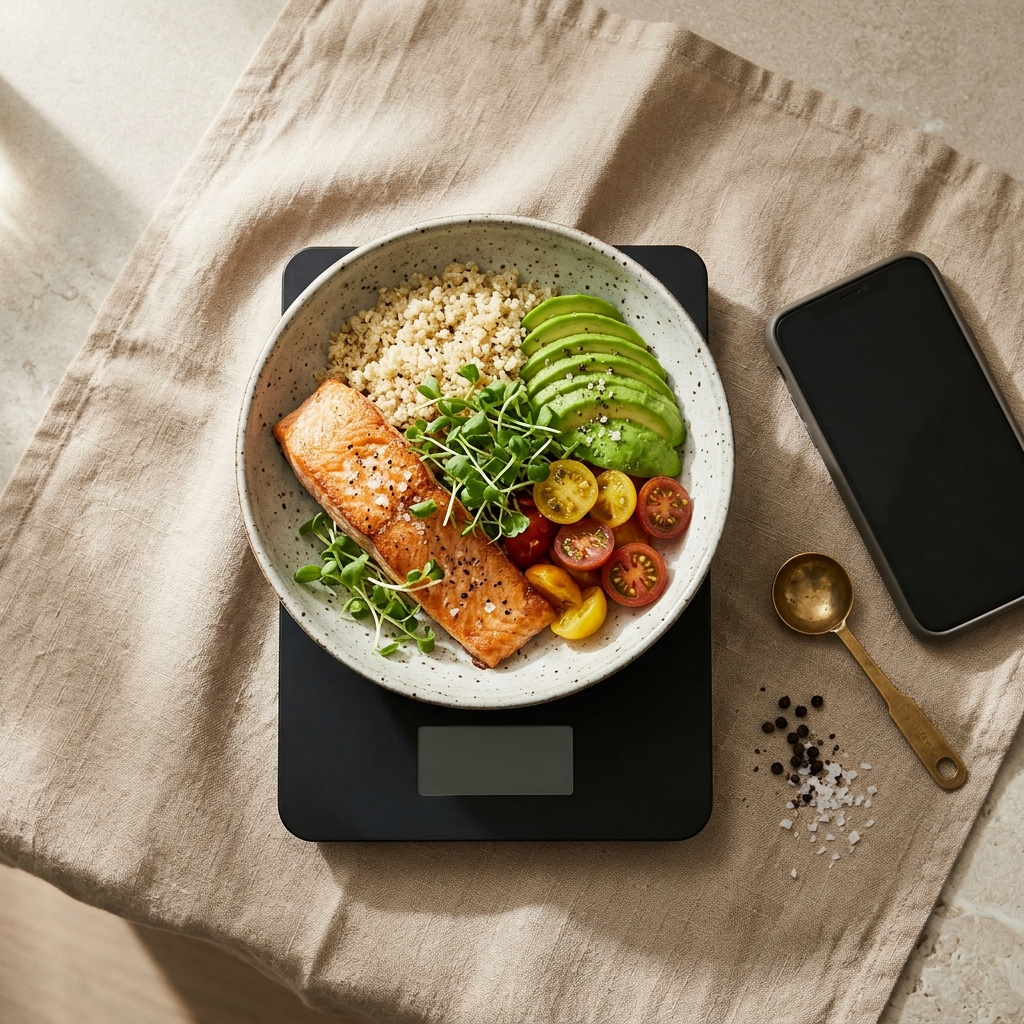
Relying exclusively on a digital kitchen scale creates friction that causes many people to abandon nutrition tracking altogether. Scales are impractical in restaurants, office cafeterias, and social gatherings, and weighing every individual ingredient during meal preparation adds substantial time to daily routines. When tracking depends on hardware, any meal eaten away from the kitchen becomes an unrecorded guess. Developing scale-free estimation skills supported by photo-based tracking removes this barrier and shifts the focus from gram-perfect precision to sustainable long-term consistency.
1. Use AI Photo Recognition for Immediate Meal Estimates
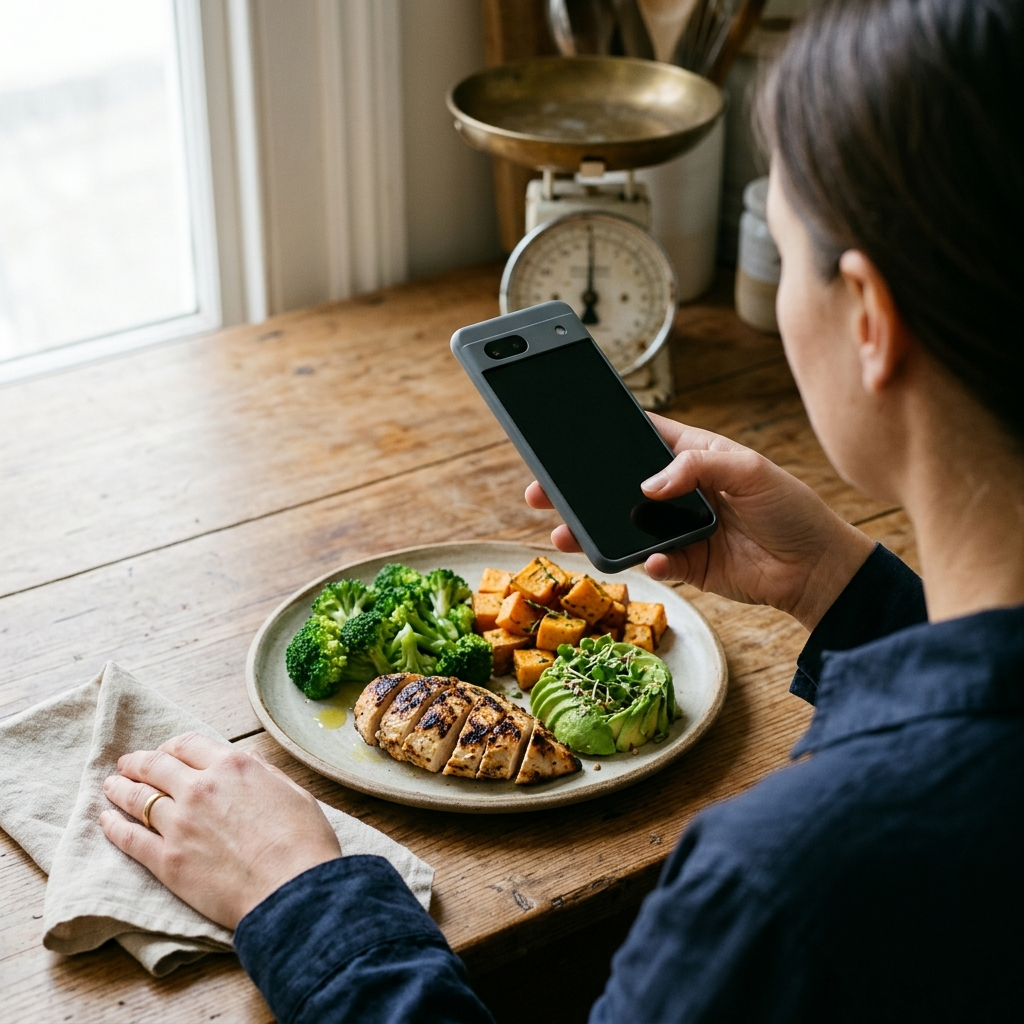
Modern visual recognition replaces manual database searches and gram measurements with automated image analysis. When you photograph a plate using Food Ai, the application identifies the food items present and estimates their portion volumes directly from the image. Instead of typing each ingredient into a search bar and guessing whether a chicken breast weighs four ounces or six, you receive an immediate calculation of total calories alongside a full macronutrient breakdown of protein, fats, and carbohydrates.
To get the most reliable estimates from photo analysis, how you capture the meal matters as much as the software itself. Clear visual context helps the algorithm distinguish between dense and airy foods and judge depth accurately.
- Capture the entire plate from a 45-degree angle: This perspective reveals both the surface area and the vertical height of the food, whereas a flat overhead shot can hide thickness.
- Ensure adequate lighting and separation: Photograph meals in well-lit environments and avoid stacking foods on top of one another whenever possible so each component remains visible.
- Include standard tableware in the frame: Keeping the edges of the plate, bowl, or utensils visible gives the visual model spatial reference points for scale.
- Review confidence scores before saving: Check the smart confidence scoring provided by Food Ai to see how certain the system is about specific items on your plate.
Key Takeaway: Well-framed meal photos allow AI recognition to handle the initial heavy lifting of portion and macro estimation in seconds.
2. Combine Smart Confidence Scoring with Manual Overrides
Automated photo analysis excels at identifying visible whole foods, standard cuts of meat, and common side dishes, but no camera can see hidden ingredients absorbed during cooking. Oils, butter, cream sauces, and dressings enclosed inside a wrap or mixed into a stew alter calorie density without changing the visual volume of the dish. Treating photo estimates as a structured baseline rather than an unchangeable final number protects your tracking accuracy.
Food Ai addresses this limitation by pairing its automated estimates with smart confidence scoring and a manual override feature. When the system flags a lower confidence level on a complex mixed dish, or when you know a restaurant meal was prepared with extra cooking oil, you can review and adjust the suggested portions or ingredients directly before logging.
- Inspect low-confidence items first: If a casserole, smoothie, or grain bowl receives a moderate confidence score, verify the primary calorie drivers such as nuts, cheeses, or grains.
- Account for cooking fats manually: Add or adjust the fat allocation when meals are pan-fried, sauteed, or dressed with oil-based vinaigrettes that do not register visually.
- Verify protein density: Confirm whether a recognized cut of meat is lean or marbled, such as distinguishing between skinless chicken breast and chicken thigh, and adjust the entry if needed.
Key Takeaway: Using confidence scores to guide quick manual overrides bridges the gap between convenience and nutritional precision.
3. Apply the Hand-Portion Reference System as a Visual Cross-Check
Even when using an intelligent nutrition tracker, understanding physical portion equivalents sharpens your ability to verify AI suggestions and build balanced plates. Your hand is proportional to your body size and always available, making it the most reliable portable reference tool for estimating volume without kitchen equipment.
Standard Hand-to-Portion Conversions
- Closed fist (approximately 1 cup): Use a fist to gauge portions of fibrous vegetables, fresh fruit, soups, or cooked whole grains like rice and oats.
- Palm of the hand (approximately 3 to 4 ounces cooked): The thickness and diameter of your palm—excluding fingers—corresponds to a standard serving of dense protein such as poultry, fish, beef, or firm tofu.
- Cupped hand (approximately 0.5 cup or 1 to 2 ounces): A cupped palm measures denser carbohydrate sides like beans, lentils, pasta, or snack portions of nuts and dried fruit.
- Thumb (approximately 1 tablespoon): The length and width of your entire thumb matches one tablespoon of calorie-dense fats, including peanut butter, hard cheese, mayonnaise, or salad dressing.
- Thumb tip (approximately 1 teaspoon): From the knuckle to the tip of the thumb equals roughly one teaspoon, useful for estimating butter or cooking oils added to a pan.
When you snap a photo in Food Ai and review the resulting breakdown, mentally comparing the meat on your plate to your palm or the starch to your cupped hand takes two seconds. If the visual portion equals two palms of salmon, you can immediately confirm whether the logged estimate reflects a double serving.
Key Takeaway: Hand measurements give you an instant physical benchmark to validate digital portion estimates anywhere you eat.
4. Standardize Home Dishware and Read Packaged Volumes
Tracking without a scale at home becomes effortless when you turn your everyday bowls, plates, and mugs into calibrated vessels. Most households eat from the same small rotation of dishware every week. By measuring the liquid or dry capacity of your favorite bowls and glasses once with a standard measuring cup, you establish permanent visual fill lines that never require future weighing.
In addition, packaged foods and restaurant chains already provide structural data that eliminates guesswork. Combining nutrition label serving counts with visual division lets you log meals accurately in seconds.
- Establish fill lines on everyday bowls: Pour one cup of water or dry oats into your regular breakfast bowl, note where the level sits relative to the rim or pattern, and use that visual marker every morning.
- Divide multi-serving packages by fractions: If a container of Greek yogurt or a tray of prepared chicken lists four servings per package, dividing the container into four equal quadrants gives you an exact single serving without touching a scale.
- Use the plate-division method for mixed meals: Fill half your plate with non-starchy vegetables, one quarter with lean protein, and one quarter with complex carbohydrates so your meal proportions remain predictable before you take a photo.
Key Takeaway: Pre-calibrating household dishes and dividing pre-labeled packages removes daily measurement tasks while keeping portion sizes consistent.
5. Monitor Weekly Trends Instead of Single-Meal Perfection
The primary fear among people who stop weighing food is that small estimation errors will derail their health objectives. In practice, daily calorie intake naturally fluctuates, and minor overestimates on one meal often cancel out minor underestimates on the next. What determines progress toward weight management or muscle retention is your cumulative weekly energy balance and macronutrient distribution, not whether Tuesday's lunch was off by thirty calories.
Food Ai supports this broader perspective through its comprehensive dashboard and analytics. Rather than fixating on a single meal entry, you can use real-time progress tracking to monitor your remaining daily calorie budget and review the visual macro breakdown to ensure protein, carbohydrates, and fats stay balanced throughout the day. Over longer periods, the weekly trend analysis charts reveal patterns in your nutrition habits—such as consistent weekend surpluses or low weekday protein intake—allowing you to make practical adjustments to your meal choices.
By setting personalized goals during onboarding and logging every meal consistently via photo analysis, you build a complete nutritional dataset. Consistent logging of eighty-five percent accurate estimates produces far better long-term guidance than three days of gram-perfect weighing followed by four days of unrecorded eating.
Key Takeaway: Reviewing weekly trend analytics and daily macro distributions keeps you aligned with your health goals without requiring gram-level perfection at every meal.
Frequently Asked Questions
You can estimate calories without a scale by using AI photo recognition in apps like Food Ai to analyze meal images, cross-checking portions with hand measurements (such as a palm for protein and a fist for cups), and dividing packaged foods by their listed serving fractions.
Food Ai analyzes a photograph of your meal to identify the individual foods and estimate portion sizes. It then provides a breakdown of calories, protein, fats, and carbohydrates along with a confidence score, and allows you to manually override and adjust any details for accuracy.
When eating meals prepared with cooking oils, butter, or heavy dressings that are not fully visible in a photo, use the manual override feature in Food Ai to adjust the suggested ingredients or portion estimates so your daily calorie and fat totals remain accurate.
Yes. Long-term progress depends on consistent daily logging and weekly calorie averages rather than gram-perfect precision at a single meal. Reviewing weekly trend analysis and daily macro breakdowns helps you stay within your target calorie budget over time.