How to Maintain a Calorie Deficit Without Weighing Every Meal
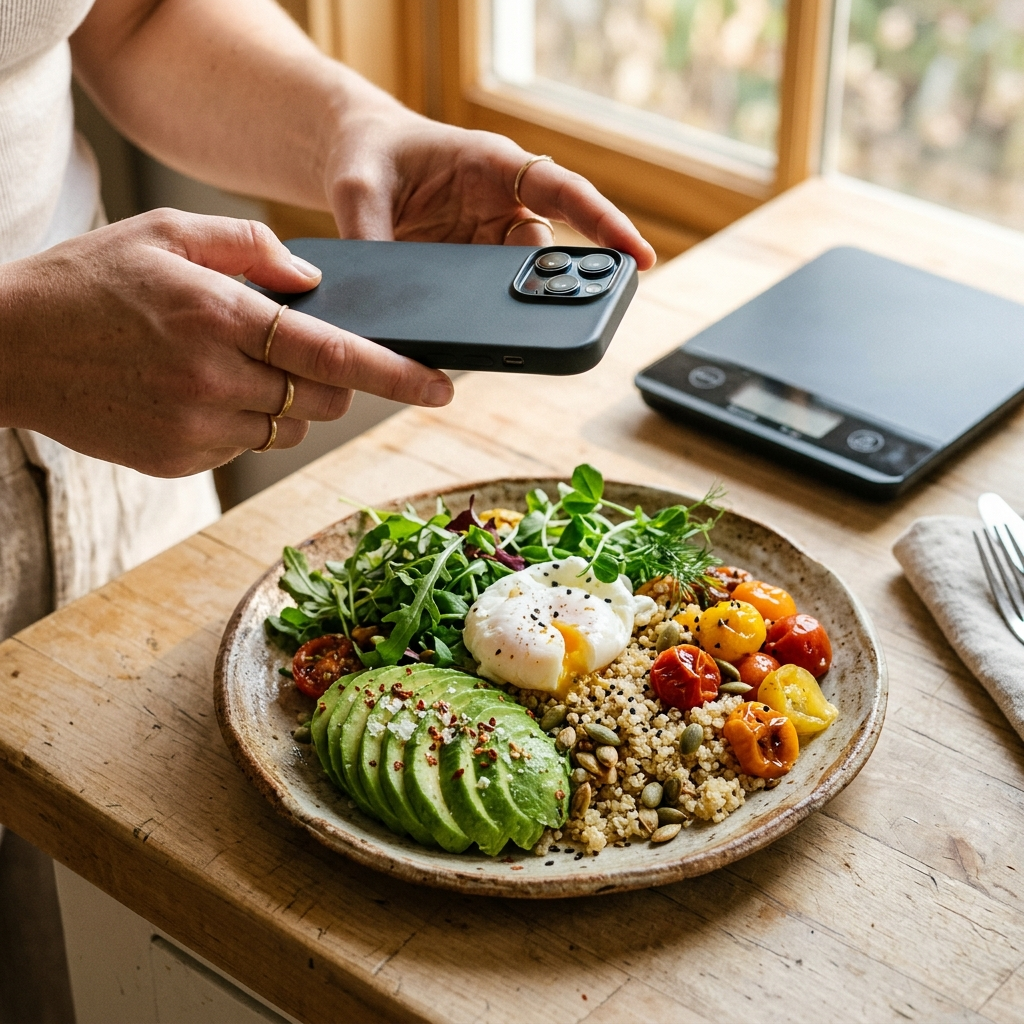
Maintaining a calorie deficit does not require weighing every portion of food on a digital kitchen scale. You can manage your energy balance sustainably by pairing visual portion benchmarks and structured plate composition with automated photo logging in Foodly. This approach preserves dietary adherence while preventing the tracking fatigue associated with weighing food.
The Friction of Traditional Calorie Tracking
Conventional weight management advice often emphasizes exact measurement. While weighing food can build nutritional awareness initially, doing so indefinitely introduces friction to daily life.
Weighing every meal complicates social dining, lengthens meal preparation, and often encourages an all-or-nothing mindset. When tracking becomes burdensome, consistency declines. Sustainable fat loss depends on maintaining an average energy deficit over weeks rather than achieving exact precision on a single day.
- Tracking fatigue: High-friction routines often lead people to stop logging entirely.
- Social constraints: Requiring exact weights can make dining out or sharing meals with family challenging.
- False precision: Packaged food labels and standard nutrition reference databases already contain natural variances in caloric content.
Key Takeaway: Long-term fat loss relies on steady consistency rather than short-lived, stressful perfection.
Use Anchor Measurements and Visual Benchmarks
Hands serve as a practical, portable guide for portion estimation because their proportions scale relative to individual frame size. Instead of carrying a food scale, use hand-based estimates to establish balanced portion sizes.
A palm-sized portion represents approximately 20 to 30 grams of protein, such as chicken breast, tofu, or fish. A cupped hand corresponds to a standard serving of cooked carbohydrates, such as rice, oats, or beans. A closed fist serves as a baseline for fibrous vegetables, while the thumb approximates a standard serving of cooking oil, butter, or nut butter.
Hand-Based Serving Framework
- Protein: One to two palm-sized portions per main meal.
- Vegetables: One to two fist-sized portions per main meal.
- Carbohydrates: One cupped-hand portion, adjusted according to your daily energy target and activity level.
- Fats: One to two thumb-sized portions, accounting for dressings and cooking oils.
Key Takeaway: Hand measurements offer reliable, repeatable portion boundaries wherever you prepare or eat food.
Streamline Estimation with Foodly's Visual AI
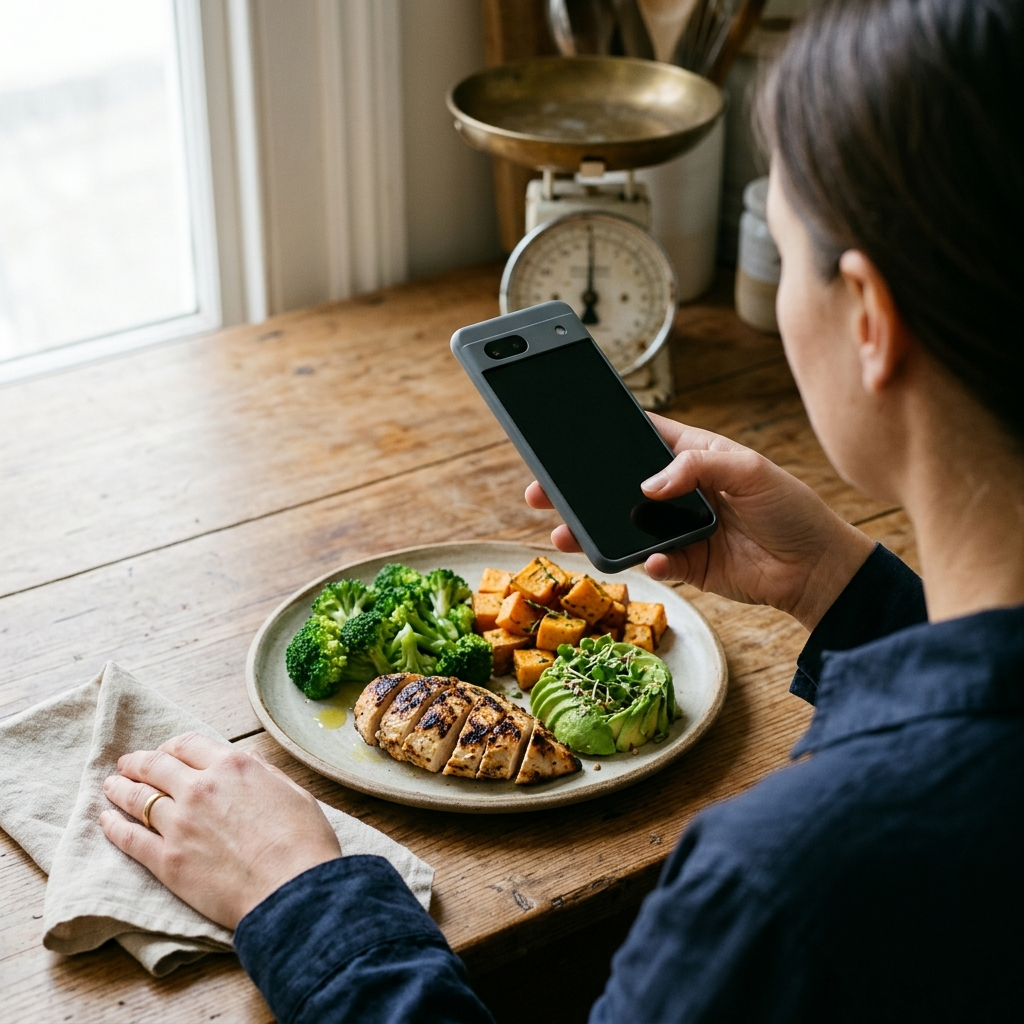
Visual estimation is simpler when supported by automated logging. Instead of searching nutritional databases and entering gram amounts manually, you can photograph your plate with Foodly to evaluate calories and macronutrients directly.
Foodly analyzes meal photos to identify food items, estimate portions, and calculate nutritional values. Each estimate includes a confidence score, and you can adjust values using the manual override to ensure the entry matches your meal. This reduces the time required to log food while maintaining tracking habits.
Consistent photo logging also captures items that are easily omitted when manual entry is too slow, such as restaurant sides, garnishes, and dressings.
Key Takeaway: Photo-based logging maintains accountability and tracking consistency without the burden of manual measurement.
Standardize Your Foundation Meals
Estimating every meal from scratch introduces decision fatigue and increases portion variance. A practical strategy is to establish predictable foundation meals for daytime eating, especially breakfast and lunch.
Foundation meals are recurring meals prepared with familiar ingredients. Because you already understand their approximate energy yield, you do not need to recalculate them daily. Examples include a Greek yogurt bowl with fruit or a balanced chicken and grain salad.
Standardizing weekday daytime intake creates a predictable calorie baseline, leaving greater flexibility for varied family dinners or social meals.
- Select two breakfast options and two lunch options that fit your protein requirements and keep you full.
- Log each option once in Foodly to verify its baseline caloric and macronutrient profile.
- Rotate these selections on weekdays without re-analyzing individual ingredients.
Key Takeaway: Predictable daytime meals reduce decision fatigue and help protect your target calorie deficit.
Look at Weekly Trends Instead of Daily Targets
Daily body weight and caloric intake naturally fluctuate. Hydration levels, sodium consumption, digestion, and hormonal changes cause day-to-day scale variations that do not reflect changes in body fat.
Rather than evaluating adherence over a single 24-hour window, review your weekly averages. Foodly's dashboard and weekly trend analytics show your intake patterns and macronutrient distribution over seven-day intervals. A higher intake on one day balanced by a moderate intake on subsequent days preserves your overall progress.
If your weekly trend line demonstrates progress toward your goal over three to four weeks, your estimation process is effective. If weight remains unchanged across a month, adjust daily portions downward by a single cupped hand of carbohydrates or half a thumb of dietary fat.
Key Takeaway: Weekly trend data smooths out natural daily fluctuations to reflect true energy balance accurately.
A Checklist for Weight-Free Deficit Tracking
Managing a calorie deficit without a scale requires structured habits. Use this four-step checklist to maintain consistency:
- Anchor meals with lean protein: Include a palm-sized protein portion in every meal to support satiety and muscle preservation.
- Fill half your plate with vegetables: Use leafy greens or cruciferous vegetables to provide meal volume with low caloric density.
- Log meals with Foodly: Take a photo of your plate before eating, review the confidence score and macro breakdown, and make quick adjustments if needed.
- Review weekly analytics: Check your rolling weekly summary in the dashboard regularly instead of fixating on single-day measurements.
Sustainable Adherence Over Mechanical Precision
Fat loss requires an energy deficit, but long-term success is determined by dietary adherence. While digital scales provide exact numbers, the friction of weighing every meal can lead to burnout. By using visual portion guidelines, standardizing staple meals, and logging intake through Foodly's photo recognition, you can manage nutrition effectively and sustainably.
Frequently Asked Questions
Yes. A calorie deficit requires consuming less energy than your body expends. This can be achieved through visual portion control, hand-based serving measurements, and balanced plate composition without using a kitchen scale.
Photo food logging estimates portion sizes and macronutrients within a range suitable for general fat loss and health goals. Foodly pairs visual analysis with confidence scores and manual override options, allowing quick corrections without weighing ingredients.
If body weight trends show no change over three to four consecutive weeks, adjust your intake by trimming a small portion of fats or carbohydrates, or increase daily baseline activity like walking.