Acoustic Displacement: How a 165 Hz Frequency Clears Water from Speakers
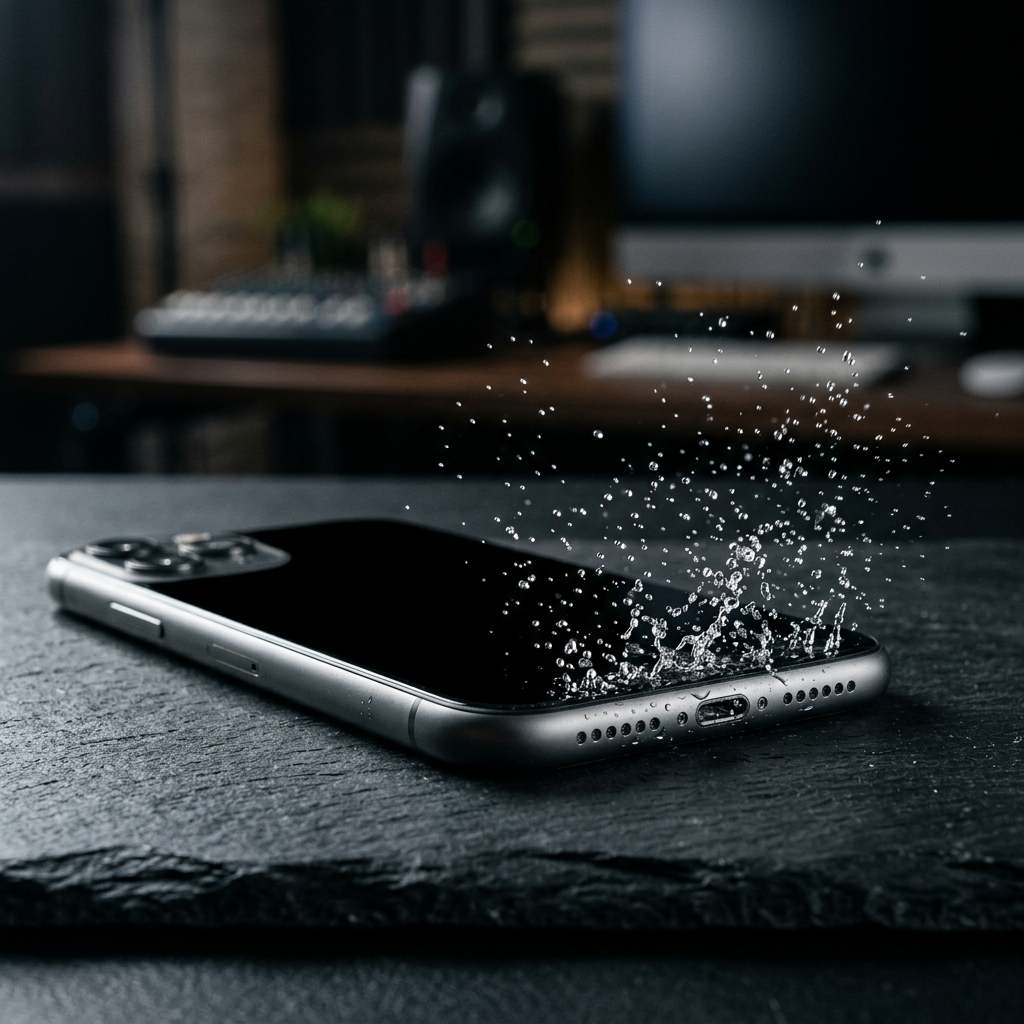
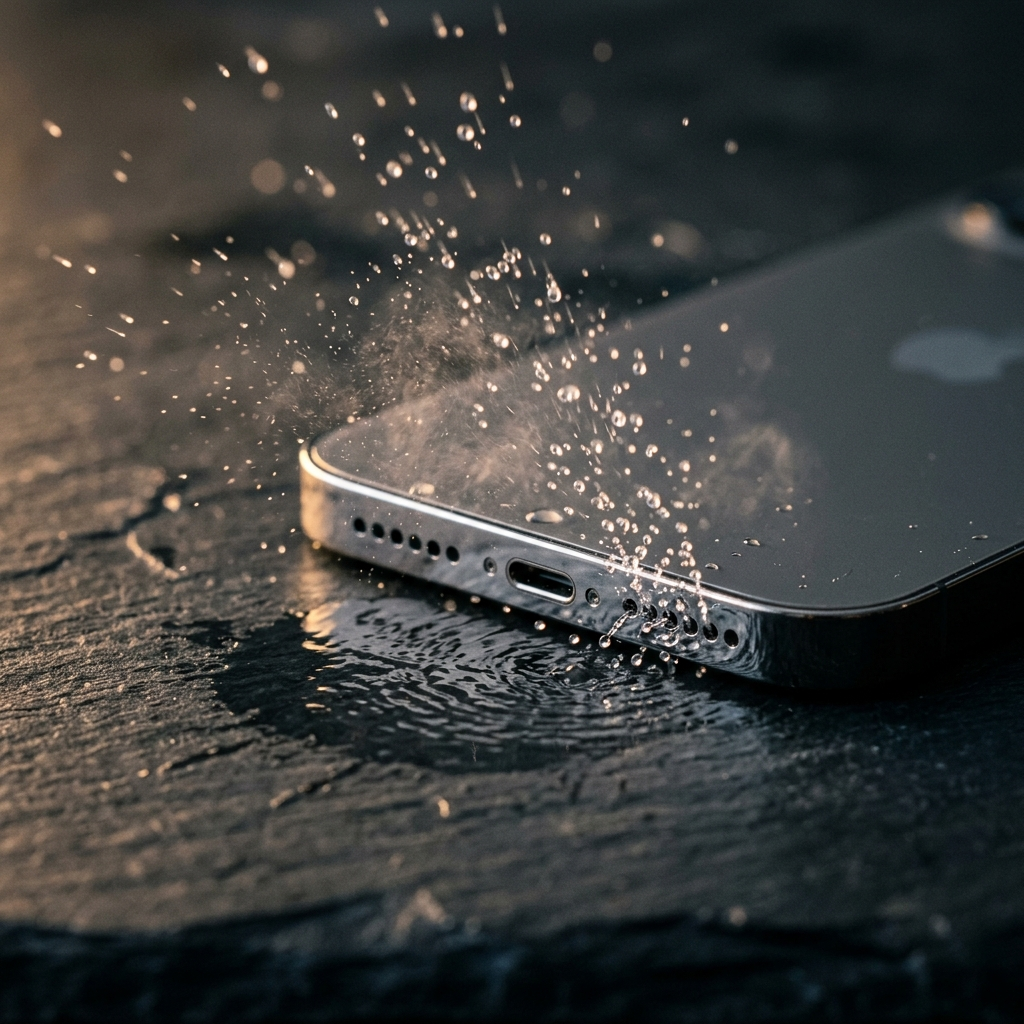
A 165 Hz acoustic tone clears water from a speaker diaphragm by pairing large mechanical oscillations with sufficient force to overcome the fluid's surface tension and inertia. This low frequency drives significant excursion in micro-transducers, generating pressure differentials that dislodge moisture trapped across the acoustic mesh.
The Mechanics of Liquid Retention in Micro-Speakers
Mobile devices protect internal components with acoustic grilles backed by hydrophobic mesh. While effective against splashing, liquids that breach or settle on the barrier form a capillary meniscus across microscopic pores. Water resting on the diaphragm or within the acoustic chamber dampens vibration by adding mass to the moving assembly.
Evaporation within these compact cavities is slow because of negligible airflow. Trapped water reduces diaphragm suspension compliance, shifts electrical impedance, and distorts audio playback. Clearing the liquid requires mechanical force capable of breaking fluid adhesion to plastic and metal surfaces.
- Capillary action: Draws water into narrow channels and secures it against porous grilles.
- Viscous damping: Adds mechanical mass to the voice coil assembly, suppressing output levels.
- Surface energy barrier: Holds droplets stable until external kinetic energy shears the interface.
Displacement Dynamics and Frequency Selection
Micro-speakers generate acoustic energy through physical excursion of a diaphragm driven by a voice coil in a magnetic gap. Diaphragm excursion is inversely proportional to the square of frequency at constant power. High frequencies, such as 3,000 Hz, yield displacements measured in sub-microns—insufficient to dislodge fluids.
Lower frequencies generate greater physical excursion. Below 100 Hz, however, compact suspension assemblies encounter steep mechanical limitations, risking voice-coil bottoming and signal distortion. A frequency of approximately 165 Hz balances physical excursion against driver safety thresholds.
The Role of Excursion in Fluid Displacement
To eject fluid, diaphragm acceleration must exceed gravitational and capillary forces holding the droplet. At 165 Hz, cyclic diaphragm motion functions as a reciprocating pump, compressing air volumes in the front and rear chambers to generate transient positive pressure.
- The voice coil drives the diaphragm forward at high amplitude.
- Transient positive pressure builds behind trapped droplets.
- Kinetic transfer overcomes adhesive forces along enclosure surfaces.
- Dislodged droplets break into smaller particles and exit through the external grille.
Resonance and Electro-Acoustic Efficiency
Every loudspeaker assembly has a fundamental resonant frequency (f0), defined by the moving mass of the diaphragm and the stiffness of the air cavity and suspension. In smartphone drivers, mechanical resonance typically ranges between 150 Hz and 900 Hz, depending on enclosure geometry and port architecture.
Driving the speaker near its operational resonance maximizes electrical-to-mechanical conversion efficiency. Operating near 165 Hz optimizes excursion per watt of electrical input, generating peak pressure in the acoustic cavity without causing excessive thermal rise in the voice-coil windings.
- Energy efficiency: Resonance yields maximum diaphragm velocity at sustainable drive voltages.
- Pressure generation: Internal standing waves focus force behind the acoustic port.
- Driver compatibility: 165 Hz serves as an effective operational target across varied micro-transducer designs.
Overcoming Surface Tension
Water has a surface tension of approximately 72.8 mN/m at room temperature. In ports under two millimeters wide, surface tension easily sustains a liquid seal across the aperture. High-frequency acoustic waves displace the meniscus slightly without breaking this surface barrier.
A sustained 165 Hz tone induces interfacial instability (such as Rayleigh-Taylor effects) across the liquid-air boundary. Once the acceleration imparted by oscillating air exceeds stabilizing surface forces, the meniscus collapses and breaks into droplets carried outward by the acoustic flow.
- Meniscus collapse: Cyclic displacement destabilizes the liquid bridge spanning the grille apertures.
- Droplet breakup: Mechanical shear fractures large droplets into fine particles that exit through the mesh.
- Progressive clearance: Once the fluid seal is broken, subsequent cycles clear remaining moisture from the port.
Acoustic Ejection Protocol
Acoustic expulsion should follow a deliberate sequence to avoid forcing moisture farther into the device chassis.
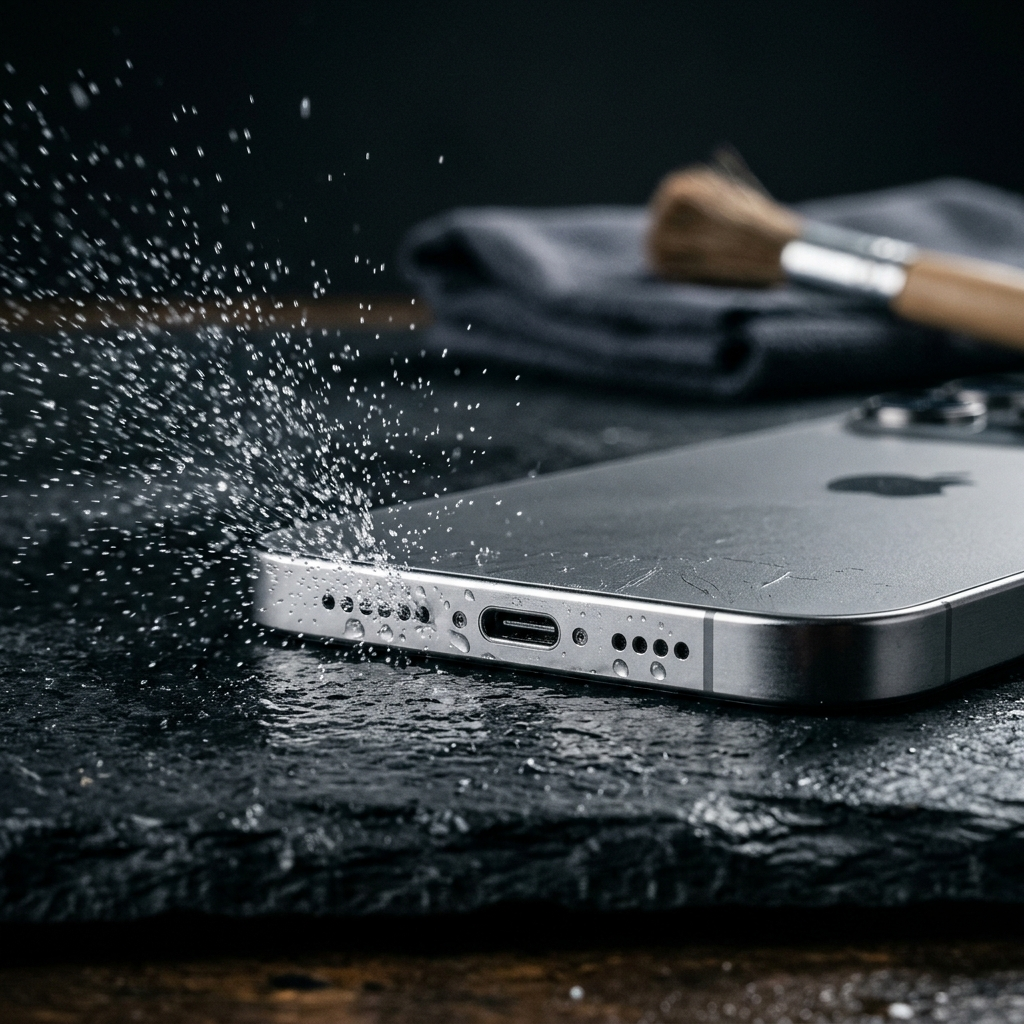
- Dry the exterior: Wipe the enclosure with a lint-free cloth to eliminate pooled surface liquid.
- Position the device: Tilt the device so the primary speaker grille faces downward at a 45-degree angle, allowing gravity to assist fluid egress.
- Activate the expulsion tone: Play a 165 Hz tone at full volume for 30 to 60 seconds to initiate displacement.
- Remove ejected fluid: Promptly wipe away moisture emerging on the grille before capillary action draws it back inside.
- Verify audio performance: Assess audio clarity; repeat the sequence if lower registers remain attenuated.
Conclusion
Acoustic water ejection relies on mechanical energy rather than thermal evaporation. By leveraging the physical dynamics of diaphragm excursion and resonant efficiency, a 165 Hz tone converts electrical input into directional kinetic force that breaks fluid surface tension. Tailored low-frequency audio provides a practical, non-invasive method for clearing trapped moisture from delicate micro-transducers.
Frequently Asked Questions
When played at system volumes for short durations (30 to 60 seconds), a 165 Hz tone is safe for modern smartphones equipped with integrated thermal and excursion limiters. Extended playback at high volumes, however, can lead to thermal stress in the voice coil.
Diaphragm displacement is inversely proportional to frequency. At 1,000 Hz, diaphragm movement is limited to sub-microns, whereas 165 Hz generates the mechanical displacement and air pressure required to break water surface tension.
No. The acoustic tone mechanically expels liquid droplets trapped on the diaphragm and grille. It does not generate heat to evaporate internal vapor, which requires passive drying.
Position the device with the speaker grille angled downward. This ensures gravity assists acoustic pressure in pulling loosened droplets outward rather than allowing them to settle back into the cavity.