Top Gold Market Tracking Apps for Day Traders in 2026
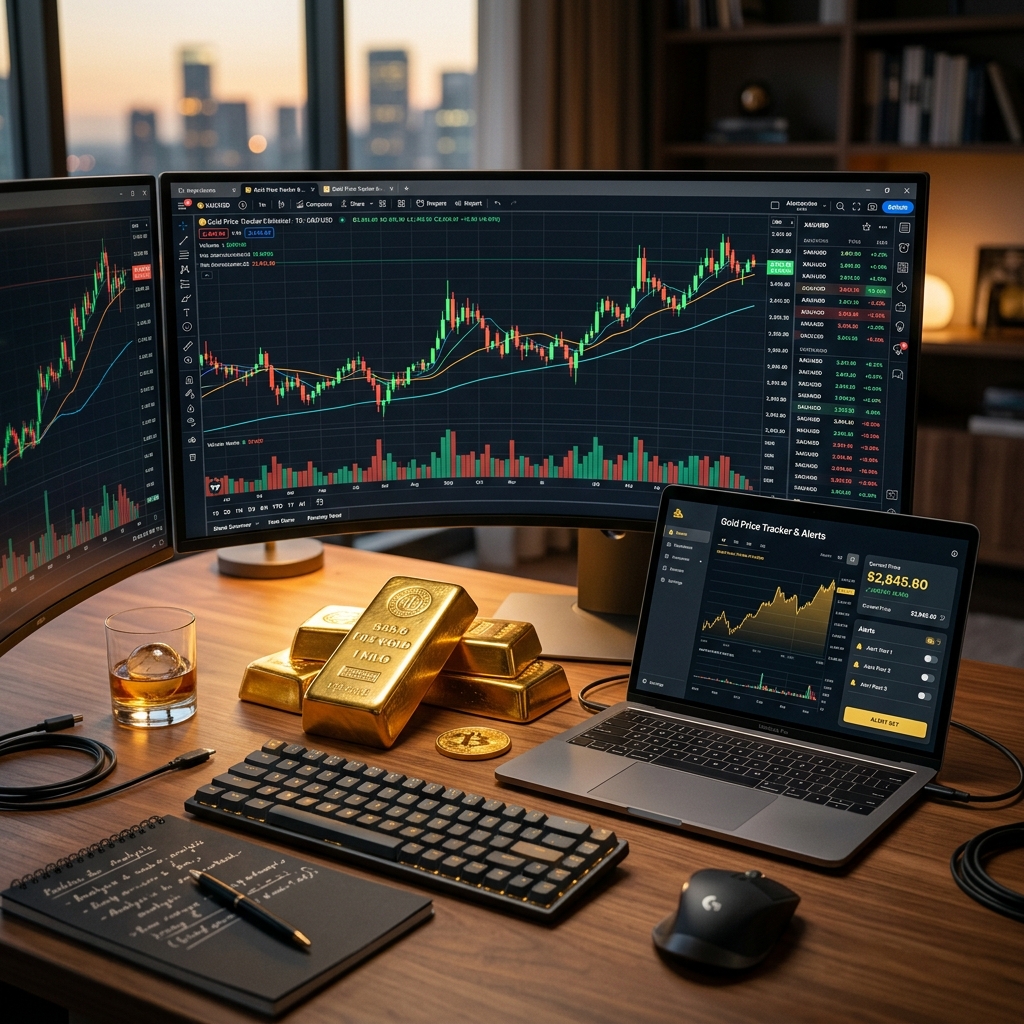
Day trading gold in 2026 requires specialized market tracking apps that deliver sub-second data synchronization, deep order book visibility, and multi-asset derivative context. Short-term traders rely on platforms combining real-time spot XAU/USD pricing, COMEX futures order flow, and robust push alert architectures to capture intraday momentum. Selecting the optimal tracking solution requires evaluating data feed speeds, technical indicator stability, and mobile cross-synchronization.
The Core Challenge: Latency and Data Integrity in Intraday Gold Trading
Gold trading across global sessions presents distinct microstructural challenges. Spot gold prices move continuously across London, New York, and Asian market hours, driven by central bank announcements, interest rate expectations, and currency fluctuations. For intraday traders, delays of even a few hundred milliseconds translate directly to execution slippage and diminished risk-reward profiles.
Generic financial tracking applications often aggregate prices from delayed feeds or single liquidity pools, creating discrepancies between broker execution windows and display screens. Active day traders require aggregated tick data that reflects global OTC spot liquidity alongside futures volume from CME/COMEX to identify true institutional support and resistance zones.
Key Takeaway: Avoid trading intraday gold using applications with delayed or single-source price feeds. Prioritize platforms that aggregate multi-venue OTC liquidity and exchange futures data in real time.
Key Selection Criteria for 2026 Gold Tracking Software
Evaluating gold market applications requires looking beyond basic line charts and static price quotes. Evaluate tools across five technical benchmarks:
- Tick-by-Tick Data Synchronization: Low-latency WebSockets or dedicated data streams to update prices instantly without manual refreshing.
- Market Depth and Order Flow Integration: Access to Level 2 order books and volume profile indicators to reveal institutional liquidity clusters.
- Customizable Technical Engine: Multi-timeframe candle analysis, VWAP, market profile, and volatility bands tailored to XAU/USD behavior.
- Multi-Asset Correlation Views: Simultaneous chart overlays of correlated macro instruments, such as the U.S. Dollar Index (DXY) and treasury yields.
- Reliable Push Alert Infrastructure: High-priority server-side notifications to prevent alert drops during high-volatility economic news releases like NFP or CPI.
Key Takeaway: Select a platform that balances technical depth with low-overhead execution. Volume profile tools and DXY correlation overlays are essential for professional intraday context.
Top Tier Tracking Apps for Active Gold Day Traders
The market tracking software landscape in 2026 comprises full-featured analytical terminals, mobile-first alert suites, and specialized order flow applications. Each serves distinct operational workflows depending on whether a trader operates at a multi-monitor desk or manages positions remotely.
1. TradingView: Premier Technical Analysis and Community Scripts
TradingView serves as an industry baseline for cross-platform charting. Its cloud-native architecture delivers low-latency spot and futures charts across desktop and mobile devices. Intraday gold traders benefit from custom indicators tailored to XAU/USD volatility cycles, heatmaps, and multi-chart layouts comparing gold against bond yields.
2. MetaTrader 5 (MT5): Low-Level Execution and Depth of Market
MT5 remains widely used among forex and spot metal day traders using direct market access (DMA) brokers. Its native Level 2 Depth of Market (DOM) functionality allows traders to gauge order book balance, while its algorithmic backtesting engine supports complex automated trailing stops specific to gold price action.
3. Bloomberg Mobile & Refinitiv Eikon: Institutional Macro Context
For macro traders, news flow drives gold breakouts. Premium terminal applications provide real-time economic calendars, central bank order tracking, and options flow data. Their dedicated news feeds alert traders to market-moving events moments before commercial news outlets digest the information.
Key Takeaway: Desktop terminals handle structural chart analysis, while dedicated news terminals verify fundamental catalysts.
Essential Workflow: Setting Up an Intraday Gold Tracking System
Systematic preparation reduces execution errors during high-volatility trading sessions. Configure your gold tracking environment each trading day using these steps:
- Define Core Levels Pre-Market: Identify previous high, low, and close levels, alongside weekly VWAP and key liquidity pools on 4-hour and 1-hour charts.
- Establish Macro Correlation Charts: Set up simultaneous workspace panels for XAU/USD, DXY (U.S. Dollar Index), and the 10-Year U.S. Treasury Yield (US10Y).
- Configure Volatility Alerts: Set price alerts 50 to 100 pips ahead of major support or resistance boundaries rather than directly on the level, providing operational lead time.
- Audit the Economic Calendar: Flag high-impact events (FOMC, CPI, PMI) and enable calendar countdown notifications to clear open intraday exposure prior to releases.
- Verify Feed Latency: Compare live spot bid/ask data against your broker's execution terminal to confirm feed alignment.
Key Takeaway: A disciplined pre-market setup ensures alerts trigger early enough for structured execution rather than reactive trading.
Managing Mobile Alerts and Execution Risk
Mobile tracking apps complement desktop trading setups by providing remote monitoring and contingency coverage. When managing positions away from a desk, trade execution relies heavily on push notification precision. Modern operating systems prioritize battery management, which can throttle background data sync if notifications are not configured with high priority.
Ensure mobile tracking apps utilize dedicated push channels capable of overriding device sleep states during market hours. Additionally, setting logical alerts—such as momentum rate-of-change or sudden volume expansion—proves far more effective than static price notifications.
Key Takeaway: Configure mobile apps specifically for risk monitoring and volatility warnings, relying on server-side alerts rather than local client polling.
Conclusion
Navigating the gold market in 2026 demands tools engineered for speed, accuracy, and clear visual data presentation. Winning intraday strategies rely on multi-asset macro visibility, low data latency, and robust alert frameworks that operate reliably under volatile conditions. Aligning your tracking stack with your intraday trading style minimizes execution risk and sharpens entry precision. For traders seeking a streamlined, focused solution for monitoring price movements and managing critical volatility warnings on the go, Gold Price Tracker & Alerts offers a dependable option within the general tracking category.
Frequently Asked Questions
Gold prices fluctuate within milliseconds during peak liquidity hours due to macroeconomic releases and institutional order flow. High-latency data streams create slippage, causing traders to enter or exit positions at sub-optimal price levels.
Spot gold (XAU/USD) represents the current OTC market price for immediate settlement, while gold futures trade on regulated exchanges like COMEX with specific expiration dates. Tracking both provides insight into basis spreads and institutional hedging.
Modern mobile platforms support multi-timeframe charting, technical indicators, and custom alert parameters. However, day traders typically use mobile apps for monitoring, notification management, and position adjustment rather than primary market analysis.
Instant alerts based on custom price thresholds, moving average crossovers, or sudden volume spikes allow traders to track setups without continuously monitoring execution screens.