How to Stay Consistent with Daily Azkar Using Personalized Reminders
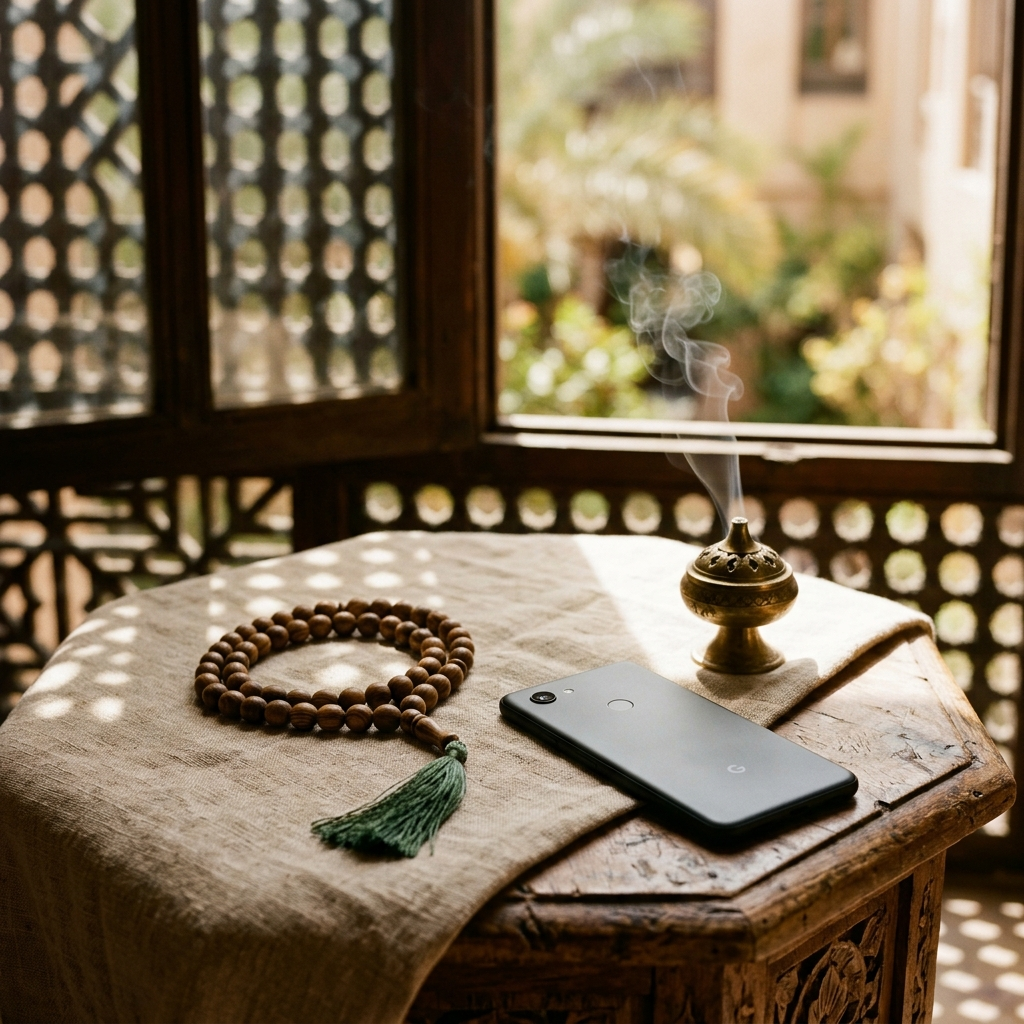
Staying consistent with daily azkar requires anchoring personalized notifications to fixed daily transitions—such as Fajr and Asr prayers—rather than relying on arbitrary clock alarms that are easily dismissed. By pairing well-timed reminders with curated morning, evening, and situational collections, audio recitations, and streak tracking inside Azkar: Islamic Spiritual Hub, Muslims can transform irregular remembrance into a sustainable spiritual habit. A structured system removes the friction of searching for authentic texts at the moment a notification appears.
Many Muslims begin a commitment to daily remembrance with sincere intention, only to see the habit fade within a week. The core obstacle is rarely a lack of devotion; it is alert fatigue paired with preparation friction. When a generic phone alarm rings during a commute or a work meeting, the user still has to locate the right supplications, verify their authenticity, and keep count of repetitions. If those tools are not immediately accessible, the notification is swiped away and the window for morning or evening remembrance closes.
Why Standard Phone Alarms Fail Spiritual Habits
A reminder is only as effective as the environment it opens into. Standard calendar alerts or clock alarms treat spiritual remembrance the same way they treat a grocery list or a meeting notice. When every alert looks and sounds identical, the brain learns to dismiss non-urgent prompts automatically, especially during high-focus hours of the day.
Furthermore, an isolated alarm separates the cue from the practice. In behavioral psychology, any delay between a trigger and the desired action sharply reduces follow-through. If a notification reminds you to recite your evening azkar, but you have to open a separate document, scroll through unorganized pages, or keep track of 33 or 100 repetitions mentally, the cognitive load becomes a barrier. Effective spiritual reminders must bridge the gap between the prompt and the recitation itself.
Key Takeaway: Replace generic phone alarms with dedicated notifications inside Azkar: Islamic Spiritual Hub so that tapping a reminder opens directly into Sheikh-attributed, authentic supplications and a built-in digital Sebha.
Designing an Anchor-Based Reminder Schedule
Consistency improves when reminders are tied to existing biological and spiritual anchors rather than random times on the clock. In Islamic tradition, daily remembrance is naturally structured around the rhythm of prayer and daily transitions: waking up, concluding the Fajr and Asr prayers, leaving the home, and preparing for sleep.
1. Align Morning and Evening Windows with Prayer Transitions
Instead of setting a morning reminder for a rigid hour when you might already be in traffic, schedule your personalized notification in Azkar: Islamic Spiritual Hub for the quiet window immediately following your Fajr routine. Similarly, set your evening azkar alert for the period after Asr or right before Maghrib, when the workday naturally winds down. Because the app supports both Arabic and English in dark and light modes, you can read comfortably whether you are in a dimly lit room at dawn or winding down at night.
2. Layer Situational Remembrance Cues
Beyond the primary morning and evening collections, daily life offers dozens of brief moments for situational remembrance. Rather than overwhelming yourself with ten different alerts at once, introduce situational azkar gradually. Use the app to bookmark supplications for entering and leaving the home, traveling, or facing moments of stress, and set a single midday check-in reminder to pause and reconnect.
- Audit your daily schedule to identify two uninterrupted ten-minute windows after Fajr and Asr.
- Configure personalized reminders in Azkar: Islamic Spiritual Hub to trigger at the start of those exact windows.
- Pre-select your preferred morning, evening, and situational collections in the Favorites tab so they load immediately.
- Enable offline functionality to ensure your scheduled recitations remain accessible during commutes or in low-signal areas.
- Review your progress tracking each Friday and adjust notification times by fifteen minutes if a reminder consistently interrupts another responsibility.
Key Takeaway: Anchor your notifications to stable prayer transitions and pre-load your favorite collections so you never have to search for what to read when the alert arrives.
Reducing Friction with Audio Recitation and Digital Sebha
Even a perfectly timed reminder will fail if your eyes or hands are occupied when it arrives. Parents managing morning routines, professionals commuting to work, and students walking between classes often skip their azkar because they cannot stop and read a screen for fifteen minutes. Adapting the format of your practice to match your physical context is essential for uninterrupted streaks.
Azkar: Islamic Spiritual Hub addresses this constraint through audio recitation options and an animated digital Sebha (Tasbih). When a morning reminder triggers during a walk or drive, switching to audio recitation allows you to listen and repeat authentic, Sheikh-attributed supplications without looking at your display. When you are seated and ready for repetitive dhikr, the digital Sebha provides tactile visual feedback with smooth animations, eliminating the distraction of losing count mid-recitation.
- Hands-busy mornings: Use audio recitation options to listen and follow along with morning azkar while preparing for the day.
- Focused quiet time: Read directly from the curated collections in your preferred language (Arabic or English) using dark mode to reduce eye strain.
- Repetitive dhikr sessions: Use the digital Sebha to track counts accurately without carrying physical beads.
- Travel and away-from-home prayers: Pair your reminder routine with the built-in GPS Qibla compass so you can pray on time and transition straight into your post-prayer azkar anywhere.
Key Takeaway: Match the delivery method to your environment by alternating between visual reading, audio recitation, and the digital Sebha whenever a reminder goes off.
Reinforcing the Habit Loop Through Streaks and Community Accountability
A notification initiates an action, but visible progress is what sustains it over months. When spiritual practices happen entirely in isolation with no record of continuity, missing a single evening session rarely feels consequential—until one missed session quietly turns into three weeks of inactivity. Structured feedback loops keep daily intention visible.
Within Azkar: Islamic Spiritual Hub, completing your reminded sessions feeds directly into personal progress tracking, streaks, and daily or weekly challenges. Earning points and achievement badges for consistent spiritual activities is not about turning worship into a mere contest; it is about creating a clear visual record of discipline. Seeing an active streak gives you a concrete reason to honor your evening notification even on exhausting days.
For those who benefit from external encouragement, the app connects individual practice with a global Muslim community. You can follow other community members, engage with posts through likes and comments, and read or publish Islamic blog content sharing practical reflections on maintaining remembrance. Optional global leaderboards and shared milestones remind you that thousands of believers worldwide are answering their morning and evening reminders at the exact same hours.
Key Takeaway: Combine personalized notifications with streak tracking, weekly challenges, and community engagement to reinforce daily accountability.
A Practical Checklist for Your First Seven Days
Building a reliable routine does not require overhauling your entire schedule overnight. Start with a focused seven-day protocol inside Azkar: Islamic Spiritual Hub to establish the cue-routine-reward loop before expanding your practice.
- Day 1: Set up two core personalized reminders—one for morning azkar and one for evening azkar—and save three foundational situational supplications to your personal Favorites collection.
- Day 2: Test the audio recitation feature during your morning window to see how it fits into your commute or household routine.
- Day 3: Complete a full post-prayer tasbih count using the digital Sebha immediately after your reminder notification.
- Day 4: Check your streak counter and review the active daily and weekly challenges to align your reminders with specific consistency goals.
- Day 5: Explore the community feed to follow fellow members and read shared insights on maintaining spiritual focus.
- Day 6: Verify that cross-platform synchronization and offline access are active so weekend travel or schedule changes do not break your streak.
- Day 7: Evaluate which reminder time had the highest completion rate and fine-tune any alert that was snoozed more than once.
Key Takeaway: Treat your first week as a calibration period, adjusting notification timing and tool selection until responding to your azkar reminder feels automatic.
Conclusion
Consistency in daily azkar is built at the intersection of sincere intention and thoughtful system design. When personalized reminders are anchored to daily prayer windows and supported by authentic Sheikh-attributed texts, audio recitations, a digital Sebha, and streak tracking, the barrier between remembering Allah and acting on that prompt disappears. Open Azkar: Islamic Spiritual Hub today, configure your morning and evening notification windows, and build a steady, connected rhythm of daily remembrance.
Frequently Asked Questions
The most effective times are immediately after Fajr prayer for morning azkar and after Asr prayer for evening azkar. Anchoring your personalized notifications in Azkar: Islamic Spiritual Hub to these existing prayer transitions ensures the alert arrives during a natural pause in your day.
When your hands or eyes are occupied, use the audio recitation feature in Azkar: Islamic Spiritual Hub to listen and repeat authentic supplications. Because the app supports offline functionality, your reminders and audio recitations work reliably even during commutes without signal.
Progress tracking, streaks, and daily or weekly challenges provide visual feedback on your discipline. By pairing personalized reminders with milestone badges and community connection inside Azkar: Islamic Spiritual Hub, you are less likely to skip an evening session after a tiring day.
Yes. Azkar: Islamic Spiritual Hub provides Sheikh-attributed authentic content for morning, evening, and situational remembrance, with multi-language support for both Arabic and English so you can recite and understand the meanings clearly.