Best Islamic Lifestyle Apps for Daily Dhikr in 2026: Features and Selection Criteria
Selecting an effective Islamic lifestyle app for daily dhikr requires evaluating core features such as counter accuracy, verified source material from authenticated Hadith collections, privacy practices, and offline functionality. Modern digital tools help Muslims maintain consistent remembrance practices alongside work and personal commitments. The most reliable applications prioritize ad-free interfaces and authentic texts over decorative visual elements.
The Digital Transition in Daily Spiritual Habits
Establishing consistency in daily remembrance (dhikr) remains a central discipline in Islamic spiritual practice. While traditional misbaha beads remain widely used, digital platforms offer essential support for urban professionals and travelers who require portable, accessible tools. However, the rapidly growing market for religious software presents challenges regarding data privacy, textual accuracy, and intrusive monetization strategies.
Many users encounter applications interrupted by video advertisements during quiet supplication or discover unverified supplications lacking scholarly oversight. Choosing the right digital environment directly impacts focus (khushu) and long-term habit formation. Evaluating applications based on technical build quality and theological rigor ensures digital assistance enhances rather than distracts from spiritual goals.
Essential Criteria for Evaluating Dhikr Applications
Before installing a digital counter or supplication guide, users should inspect four primary structural benchmarks to ensure reliability and safety.
- Source Verification: Supplications must explicitly cite authentic collections such as Sahih al-Bukhari, Sahih Muslim, or Hisn al-Muslim (Fortress of the Muslim).
- Privacy and Data Handling: Applications should operate without requiring personal profile creation, location tracking, or contact list access.
- Interface and Ergonomics: Haptic feedback, dark mode support, and customizable tap zones allow users to track counts without continuously looking at the screen.
- Offline Capability: Complete core functionality must remain accessible without an active internet connection to prevent unnecessary digital notifications.
Takeaway: Prioritize applications that verify sources and respect user privacy over those offering purely aesthetic features.
Top Features in Modern Dhikr and Supplication Tools
The application development landscape in 2026 emphasizes low-friction user experience design coupled with robust offline databases. Key technical features separate high-utility tools from basic counter software.
Intelligent Counters and Haptic Customization
Advanced digital counters utilize customizable vibration patterns. By assigning unique haptic pulses to specific intervals (such as every 33rd or 100th count), users complete morning and evening remembrances with minimal visual reliance on their mobile device. This reduces eye strain and helps maintain mindfulness during quiet hours.
Structured Morning and Evening Routines
Dedicated modules for Morning and Evening Adhkar (Adhkar al-Sabah wal-Masa) provide progress tracking and structured sequencing. High-quality platforms include clear Arabic typography, transliteration toggle options, and precise English translations alongside audio recitations from recognized Qaris to assist with correct pronunciation.
Takeaway: Look for customizable tactile feedback and structured daily modules to build sustainable habits without visual distraction.
Step-by-Step Guide to Building a Daily Dhikr Habit
Integrating digital tools into daily routines requires a deliberate approach to avoid phone-induced distraction.
- Configure Notification Windows: Set automated reminders specifically aligned with post-Fajr and post-Asr time slots—traditional periods for daily adhkar.
- Enable Do Not Disturb Protocols: Utilize OS-level focus modes to suppress social media alerts while the application is active.
- Set Manageable Targets: Begin with standard short supplications, such as SubhanAllah, Alhamdulillah, and Allahu Akbar (33 times each), before adding extended litanies.
- Review Text Accuracy: Compare app content against verified print texts or consult local scholars when using less familiar supplications.
Takeaway: Pair application features with strict notification controls to isolate your practice from daily digital interruptions.
Data Security and Monetization Models in Religious Software
Understanding how religious apps store data and earn revenue is vital for user security. Many free applications sell user location logs or display aggressive banner ads that diminish the user experience. Ethical developers generally utilize one of three models: open-source community support, one-time premium purchases, or transparent non-profit funding.
Users should regularly review app permissions within device settings. A standalone dhikr counter or supplication guide does not require access to your camera, microphone, or contact directory unless specific features like Qibla compasses require coarse location services.
Takeaway: Avoid apps with invasive permissions and prioritize open-source or transparently funded platforms to protect personal data.
Conclusion
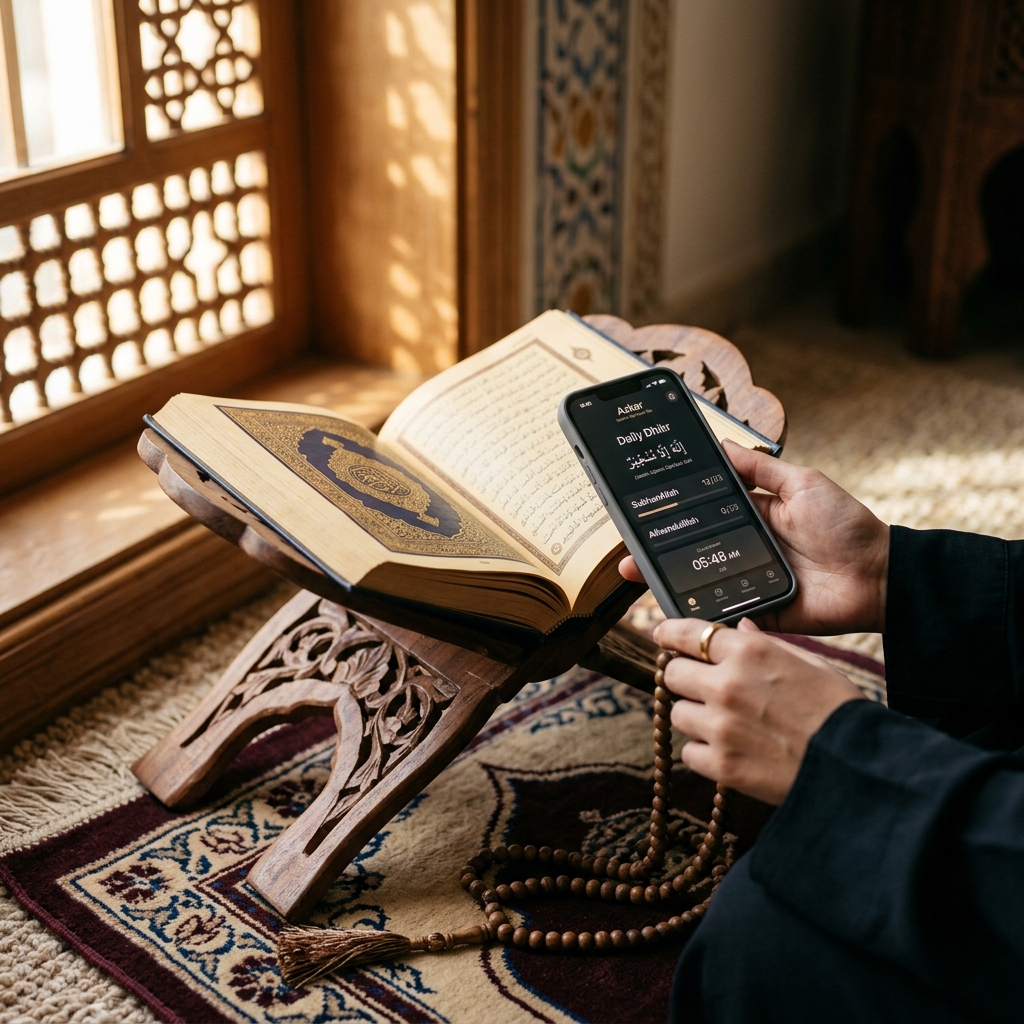
Choosing an Islamic lifestyle application for daily dhikr comes down to authenticity, user privacy, and distraction-free design. By focusing on verified source material, silent haptic interfaces, and strong data protection, believers can effectively integrate digital tools into daily routines. Comprehensive suites like Azkar: Islamic Spiritual Hub demonstrate how clean interface architecture and curated text libraries support daily remembrance while maintaining user focus and peace of mind.
Frequently Asked Questions
Check if the app provides direct references to recognized Hadith collections such as Sahih al-Bukhari, Sahih Muslim, or Sunan al-Tirmidhi. Reputable apps explicitly state their source texts and scholarly review process.
Yes. Scholarly consensus permits digital counters as tools to keep track of supplications, similar to traditional prayer beads (misbaha), provided they help maintain focus and accuracy.
Location permissions are typically required to calculate accurate local prayer times and determine Qibla direction. A standalone dhikr counter should not require location access unless it includes those specific features.
Use your smartphone's native Do Not Disturb or Focus mode to automatically mute social media, messaging, and email alerts whenever your dhikr or Quran application is active.